Choosing the right business structure is one of the most critical decisions for any entrepreneur. The entity type you select impacts your personal liability, tax obligations, ability to raise capital, and operational flexibility. This comprehensive guide compares LLCs, S-Corporations, C-Corporations, and DBAs to help you make the optimal choice for your specific business needs and goals.
Each business structure offers different combinations of liability protection, tax treatment, and administrative requirements. Understanding these fundamental differences is essential for protecting your personal assets while maximizing business efficiency and growth potential.
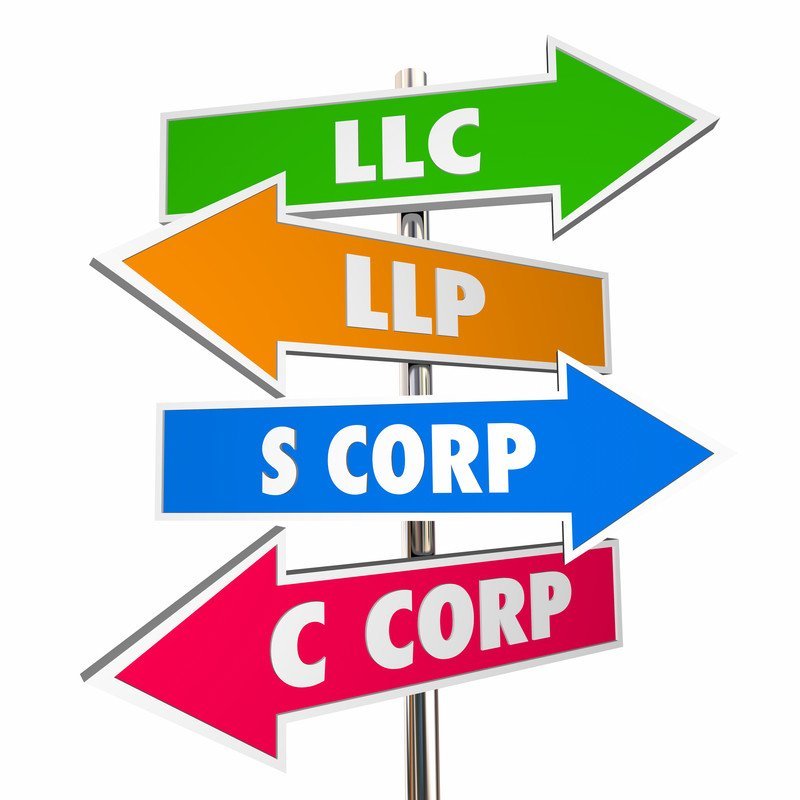
Business Structure Comparison at a Glance
Limited Liability Company
Liability: Personal assets protected
Taxation: Pass-through by default (can elect corporate)
Ownership: Unlimited members, flexible structure
Formation Cost: $50-$500 + state fees
Best For: Most small to medium businesses
Popularity: Most common for new businesses
S-Corporation
Liability: Personal assets protected
Taxation: Pass-through (avoid double taxation)
Ownership: Max 100 shareholders, US residents only
Formation Cost: Corporation formation + S-election
Best For: Profitable businesses saving on self-employment tax
Popularity: Common for established small businesses
C-Corporation
Liability: Personal assets protected
Taxation: Corporate tax + shareholder dividends taxed
Ownership: Unlimited shareholders, any nationality
Formation Cost: $100-$500 + state fees
Best For: Venture capital, going public, large businesses
Popularity: Standard for publicly traded companies
Doing Business As
Liability: NO personal asset protection
Taxation: Reported on personal return
Ownership: Individual or existing business
Formation Cost: $10-$100 registration
Best For: Sole proprietors testing business ideas
Popularity: Common for very small, low-risk businesses
Detailed Feature Comparison
| Feature | LLC | S-Corp | C-Corp | DBA |
|---|---|---|---|---|
| Liability Protection | Yes - members not personally liable | Yes - shareholders not personally liable | Yes - shareholders not personally liable | NO - personal liability for business debts |
| Tax Treatment | Pass-through by default (can elect corporate) | Pass-through (avoid double taxation) | Double taxation (corporate + dividend tax) | Pass-through (reported on Schedule C) |
| Self-Employment Tax | Applies to all profits | Only on reasonable salary | Only on salary (corporation pays employer portion) | Applies to all profits |
| Ownership Restrictions | None - anyone can be member | Max 100 shareholders, US only, one class of stock | None - unlimited shareholders worldwide | Individual or existing business |
| Formation Complexity | Moderate - articles, operating agreement | High - corporation formation + S-election | Moderate - articles, bylaws, board | Simple - just registration |
| Ongoing Compliance | Moderate - annual reports, records | High - corporate formalities, meetings, records | High - corporate formalities, meetings, records | Low - mostly just tax reporting |
| Raising Capital | Good - can issue membership interests | Limited - ownership restrictions | Excellent - can issue stock, venture capital friendly | Poor - personal loans only |
| Management Flexibility | High - member or manager managed | Low - board of directors required | Low - board of directors required | Complete - individual control |
| Tax Filing Deadlines | March 15 (partnership) or April 15 (disregarded) | March 15 | April 15 | April 15 with personal return |
| Cost to Form | $50-$500 + state fees | $100-$500 + state fees + S-election | $100-$500 + state fees | $10-$100 registration |
Tax Implications: The Critical Difference
LLC Default Taxation
Single-Member: Schedule C on Form 1040
Multi-Member: Form 1065 (partnership)
Self-Employment Tax: 15.3% on all profits
Option: Can elect S-Corp or C-Corp taxation
Quarterly Payments: Estimated taxes required
State Taxes: Vary by state (some have LLC fees)
S-Corporation Taxation
Tax Form: Form 1120-S (information return)
Flow-Through: Profits/losses to K-1s
Self-Employment Tax: Only on "reasonable salary"
Tax Savings: Can save 15.3% on distributed profits
Requirement: Must pay owner reasonable salary
IRS Scrutiny: High - salary must be reasonable
C-Corporation Taxation
Corporate Tax: 21% federal (flat rate)
Dividend Tax: 0-20% when distributed
Effective Rate: Up to 39.8% combined
Deductions: More business deductions available
Retained Earnings: Can accumulate at corporate rate
Complexity: Most complex tax structure
[KEY INSIGHT] The Self-Employment Tax Breakthrough
S-Corporations offer a unique tax advantage: owners only pay self-employment tax (15.3%) on their "reasonable salary," not on all business profits. The remaining profits can be distributed as dividends, avoiding self-employment tax. Example: $100,000 profit with $60,000 reasonable salary saves $6,120 in self-employment tax ($40,000 × 15.3%). However, the IRS closely scrutinizes "reasonable salary" and can reclassify dividends as salary if deemed too low.
Liability Protection Analysis
LLC Liability Shield
Protection: Members' personal assets shielded
Exceptions: Personal guarantees, fraud, piercing veil
Maintenance: Must maintain separation (bank accounts, records)
State Variations: Charging order protection varies
Cost: Moderate - formation + ongoing compliance
Effectiveness: Very effective when properly maintained
Corporation Liability Shield
Protection: Shareholders' personal assets shielded
Exceptions: Similar to LLC (guarantees, fraud, veil piercing)
Maintenance: Strict corporate formalities required
State Variations: Generally consistent protection
Cost: Higher - more formalities, meetings, records
Effectiveness: Well-established legal precedent
DBA Liability Exposure
Risk: Personal liability for all business debts
Examples: Lawsuits, loans, leases, contracts
Protection: Business insurance only partial solution
Home Equity: Personal home at risk
Retirement: Personal savings not protected
Recommendation: Only for very low-risk activities
[WARNING] Piercing the Corporate Veil
Both LLCs and corporations can lose their liability protection if courts "pierce the corporate veil." Common reasons include: 1) Commingling personal and business funds, 2) Failing to maintain proper records and formalities, 3) Under-capitalization (not enough assets to operate), 4) Fraud or illegal activities, 5) Treating the business as an extension of personal affairs. To maintain protection: keep separate bank accounts, document major decisions, maintain adequate insurance, and follow all legal formalities for your entity type.
Ownership & Management Structures
LLC Ownership Flexibility
Members: Individuals, corporations, LLCs, foreigners
Classes: Can create multiple membership classes
Management: Member-managed or manager-managed
Transfer: Restrictions can be placed in operating agreement
Voting: Flexible - can allocate by capital, per capita, or custom
Records: Less formal than corporations
S-Corp Ownership Restrictions
Limit: Maximum 100 shareholders
Eligibility: US citizens/residents only, certain trusts
Stock: One class of stock only (voting differences allowed)
Management: Board of directors required
Transfer: Restrictions in bylaws, but fewer than LLC
Records: Formal corporate records required
C-Corp Ownership Freedom
Shareholders: Unlimited, any nationality
Stock Classes: Multiple classes allowed (common, preferred)
Management: Board of directors, officers structure
Transfer: Freely transferable (unless restricted)
Public Offering: Can go public (IPO)
Records: Most formal requirements
Cost Analysis: Formation & Ongoing
LLC Total First Year
Formation: $50-$500 state fees
Registered Agent: $100-$300/year
Operating Agreement: $0-$200
Annual Report: $0-$350 (state dependent)
Professional Help: $0-$500 optional
Total Typical: $400 first year
S-Corp Total First Year
Formation: $100-$500 corporation formation
S-Election: $0 (Form 2553) but professional help recommended
Registered Agent: $100-$300/year
Bylaws/Records: $100-$300
Annual Compliance: Higher due to formalities
Total Typical: $800 first year
C-Corp Total First Year
Formation: $100-$500 state fees
Registered Agent: $100-$300/year
Bylaws/Records: $100-$300
Initial Board Meeting: Documentation required
Annual Compliance: Highest due to formalities
Total Typical: $700 first year
DBA Total First Year
Registration: $10-$100 county/state fee
Publication: Some states require newspaper publication
Renewal: Every 1-5 years, $10-$100
No Agent: No registered agent required
No Reports: No annual reports
Total Typical: $100 first year
Decision Matrix: Which Structure is Right For You?
Choose LLC If...
- You want liability protection but value flexibility
- You have foreign investors or owners
- You want simple management without a board
- Your business has moderate risk exposure
- You want pass-through taxation initially
- You have multiple owners with different contributions
- You want to test business before more complex structure
- Your state has favorable LLC laws (like Wyoming)
- You want charging order protection
- You value privacy in ownership structure
Choose S-Corp If...
- Your business is consistently profitable
- You want to save on self-employment taxes
- All owners are US citizens or residents
- You have 100 or fewer owners
- You don't need multiple classes of stock
- You're willing to maintain corporate formalities
- Your business generates $50,000+ net profit annually
- You can pay yourself a reasonable salary
- You don't plan to take venture capital funding
- You want established corporate case law
Choose C-Corp If...
- You plan to seek venture capital funding
- You want to eventually go public (IPO)
- You have or want foreign investors
- You want to issue multiple classes of stock
- You plan to reinvest profits rather than distribute
- You want to offer extensive employee stock options
- Your business will have 100+ owners
- You want established corporate governance
- You operate in multiple states/countries
- You need the highest level of credibility
Choose DBA If...
- You're testing a business idea with minimal risk
- You have no employees and low liability exposure
- You want the absolute simplest structure
- You have minimal business assets
- You're operating alone or with a spouse
- You're not signing major contracts or leases
- Your business has very low revenue potential
- You can't afford formation costs
- You plan to form an LLC within 6-12 months
- Your business activities are very low risk
Conversion Paths Between Structures
DBA to LLC
Process: Form LLC, transfer assets, close DBA
Timeline: 1-2 weeks typically
Tax Impact: None - both pass-through
Cost: LLC formation costs only
Common: Very common growth path
Recommendation: Do when business shows viability
LLC to S-Corp
Process: File Form 2553, adjust compensation
Timeline: Election effective next tax year
Tax Impact: Must pay reasonable salary
Cost: Professional help recommended ($500-$1,000)
When: When profits justify tax savings
Warning: IRS scrutiny on salary reasonableness
LLC to C-Corp
Process: Form corporation, merge LLC into it
Timeline: 2-4 weeks with professional help
Tax Impact: Possible tax on asset transfer
Cost: $1,000-$3,000+ with legal/tax help
When: When seeking venture capital
Alternative: Start as C-Corp if VC likely
S-Corp to C-Corp
Process: Revoke S-election, handle built-in gains
Timeline: 30-60 days minimum
Tax Impact: Possible built-in gains tax
Cost: $2,000-$5,000+ professional fees
When: Need to exceed S-Corp limitations
Warning: Tax consequences can be significant
[SUCCESS] The Smart Growth Strategy
Start as DBA for initial testing (0-6 months) → Convert to LLC when business proves viable ($300-$800) → Operate as LLC until consistently profitable ($50,000+ net) → Elect S-Corp status for tax savings (Form 2553, $500-$1,000 professional help) → Consider C-Corp only if seeking venture capital or going public. This path minimizes upfront costs while providing liability protection when needed and tax optimization when justified by profits.
State-Specific Considerations
Wyoming LLC
Privacy: No member names in public records
Cost: $100 formation + $60 annual minimum
Charging Order: Strong protection
Taxes: No corporate or personal income tax
Flexibility: Very business-friendly laws
Recommendation: Top choice for LLC formation
Delaware Corporation
Court System: Specialized business court
Case Law: Extensive corporate precedent
Investor Familiarity: VC/angel investors prefer
Cost: $90 formation + $300 annual report
Flexibility: Very corporate-friendly
Recommendation: Best for corporations, especially C-Corps
California Entities
Cost: $800 minimum franchise tax annually
Complexity: Additional state compliance
Taxes: High state income taxes
LLC Fee: Based on revenue, up to $11,790
Recommendation: Only if physically located there
Alternative: Form elsewhere, register as foreign
New Mexico LLC
Privacy: No member disclosure ever required
Cost: $50 formation, $0 annual reports
Simplicity: Minimal ongoing requirements
Taxes: No corporate income tax
Limitation: Less established case law
Recommendation: Best budget privacy option
Business Scenarios: Which Structure Works Best?
Software Startup
Structure: C-Corp (Delaware)
Why: Venture capital expected, employee stock options
Alternative: LLC convertible to C-Corp
Cost: $500-$2,000 formation
Tax Strategy: QSBS potential (50%+ tax exclusion)
Common Path: Start as LLC, convert for funding
E-commerce Store
Structure: LLC (Wyoming or home state)
Why: Liability protection, tax flexibility
Conversion: To S-Corp at $50k+ profit
Cost: $300-$800 formation
Tax Strategy: Pass-through initially, S-Corp later
Common Path: LLC → profitable → S-Corp election
Consulting Business
Structure: S-Corp or LLC taxed as S-Corp
Why: Service business with good profits, save on SE tax
Timing: Start as LLC, elect S-Corp when profitable
Cost: $500-$1,500 setup
Tax Strategy: Reasonable salary + distributions
Warning: Must pay reasonable market salary
Real Estate Investment
Structure: LLC (property-specific or series LLC)
Why: Asset protection, charging order protection
State: Wyoming, Delaware, or Nevada
Cost: $400-$800 per property LLC
Tax Strategy: Pass-through, depreciation benefits
Warning: Never hold real estate personally
Step-by-Step Decision Process
Step 1: Assess Your Liability Risk
High Risk: Physical operations, employees, contracts, products - NEED entity
Medium Risk: Services, consulting, intellectual property - STRONGLY RECOMMEND entity
Low Risk: Online content, very small scale, testing - DBA may suffice initially
Personal Assets: Home equity, savings, retirement accounts at risk without entity
Insurance: Liability insurance helps but doesn't replace entity protection
Decision: If any significant risk, choose LLC or corporation
Step 2: Analyze Tax Implications
Projected Profit: Under $30k - LLC default fine; Over $50k - consider S-Corp savings
Reinvestment Needs: Plan to reinvest profits? C-Corp may work despite double tax
Owner Compensation: Can you pay reasonable market salary? Required for S-Corp
State Taxes: Consider state corporate taxes, franchise taxes, LLC fees
Industry Deductions: Some structures offer better deduction opportunities
Professional Help: Consult CPA before S-Corp or C-Corp decision
Step 3: Consider Ownership & Growth Plans
Number of Owners: 1-2 simple; 3+ consider operating agreement complexity
Investor Types: Foreign investors? C-Corp only. US only? S-Corp possible
Funding Plans: Venture capital? Must be C-Corp. Bootstrap or loans? LLC fine
Exit Strategy: Sell business? LLC flexible. Go public? Must be C-Corp
Employee Plans: Stock options? C-Corp best. Profit sharing? Any structure
Management Style: Prefer flexibility? LLC. Want formal structure? Corporation
Step 4: Evaluate Costs & Compliance
Formation Budget: DBA: $100, LLC: $400, Corporation: $800+
Ongoing Costs: Annual reports, registered agent, tax preparation
Time Commitment: DBA: minimal, LLC: moderate, Corporation: significant
Professional Costs: Legal/tax help more needed for corporations
State Variations: Costs vary dramatically by state - research carefully
Long-term View: Cheapest now may cost more later in taxes or conversion
Step 5: Make Your Decision
Default Recommendation: LLC for most small businesses
Exception 1: Consistently profitable service business → S-Corp
Exception 2: Venture-backed tech startup → C-Corp (Delaware)
Exception 3: Testing very low-risk idea → DBA temporarily
Documentation: Whatever you choose, document the reasoning
Flexibility: Remember most structures can convert later if needed
Essential Checklist for Choosing Your Structure
List all business risks that could expose personal assets. If any significant risk exists, eliminate DBA as an option.
Estimate realistic financial projections. S-Corp benefits typically require $50,000+ net profit to justify complexity.
List all owners, their residency status, and investment amounts. S-Corps cannot have foreign owners.
Check formation costs, annual fees, and franchise taxes in your state and alternative states like Wyoming or Delaware.
Schedule a consultation with a qualified CPA to discuss your specific tax situation and optimal structure.
If venture capital is likely within 2-3 years, lean toward C-Corp from the start to avoid conversion costs.
Be honest about your willingness to maintain corporate formalities, meetings, and detailed records.
Choose a structure that allows easy conversion to your likely next structure as business grows.
Frequently Asked Questions
Can I change my business structure later if I make the wrong choice?
Answer: Yes, most business structures can be converted, but with varying complexity and cost: DBA to LLC is simple and inexpensive ($300-$800). LLC to S-Corp involves filing Form 2553 and is moderately complex (requires reasonable salary setup). LLC to C-Corp is complex and can have tax consequences ($1,000-$3,000+). S-Corp to C-Corp is very complex with significant tax considerations ($2,000-$5,000+). While conversions are possible, they often involve legal fees, tax implications, and administrative work. It's generally better to choose correctly from the start, but don't let perfection paralysis prevent you from starting - an LLC is rarely a "wrong" choice for most small businesses.
How much profit do I need to make an S-Corp worthwhile?
Answer: The general rule of thumb is that S-Corp tax savings outweigh the additional costs and complexity when your business has approximately $50,000 or more in net profit (after all business expenses but before owner compensation). Here's the math: At $50,000 profit, reasonable salary might be $40,000, leaving $10,000 as distribution. Self-employment tax savings would be $10,000 × 15.3% = $1,530. Additional S-Corp costs (payroll processing, tax preparation, compliance) might be $1,500-$2,500 annually. Thus, at $50,000 profit, you're roughly breaking even. At $100,000 profit, savings could be $6,000-$9,000. Below $40,000 profit, LLC is usually simpler and cheaper.
Is it true that venture capitalists only invest in C-Corporations?
Answer: Yes, this is generally true for institutional venture capital funds. Venture capitalists prefer C-Corporations for several reasons: 1) They can issue preferred stock with special rights (liquidation preferences, anti-dilution protection), 2) They're familiar with Delaware corporate law and its established precedent, 3) They want the ability to take the company public without restructuring, 4) They often want to invest alongside other institutional investors who also require C-Corp structure, 5) Employee stock option plans are more standardized for C-Corps. Some angel investors might invest in LLCs, but if you're serious about raising venture capital, starting as or converting to a Delaware C-Corp is strongly recommended.
What's the difference between an LLC and an LLC taxed as an S-Corp?
Answer: This is a common point of confusion. An LLC is a legal entity type, while S-Corp is a tax election. Here's the distinction: 1) Legal Structure: In both cases, you have an LLC registered with your state. 2) Default Tax Treatment: A single-member LLC is taxed as a disregarded entity (Schedule C), multi-member as partnership. 3) S-Corp Election: By filing Form 2553 with the IRS, you elect for your LLC to be taxed as an S-Corporation. 4) Result: You get the legal flexibility of an LLC with the pass-through taxation of an S-Corp (including self-employment tax savings). 5) Key Benefit: You avoid the corporate formalities of a true S-Corporation while getting the tax benefits. This is often called the "best of both worlds" approach.
Can I have a DBA and an LLC at the same time?
Answer: Yes, and this is actually a common and recommended practice. You would: 1) Form an LLC as your main legal entity, 2) Register a DBA (also called trade name or fictitious name) that your LLC operates under. Example: Your LLC is "Smith Enterprises, LLC" and your DBA is "Premium Coffee Roasters." Benefits include: 1) Liability protection from the LLC, 2) Ability to operate under a customer-friendly name, 3) Flexibility to add additional DBAs for different product lines or locations, 4) Professional appearance without revealing the LLC name to customers. The DBA registration is typically filed with the same state or county office where you registered your LLC, and there's usually a small additional fee ($10-$100).
[WARNING] The "Reasonable Salary" IRS Trap for S-Corps
S-Corporation owners must pay themselves a "reasonable salary" before taking distributions. The IRS aggressively audits S-Corps where owners take minimal salaries and large distributions to avoid payroll taxes. What's reasonable? Generally, what you would pay someone else to do your job. Factors include: industry standards, qualifications, responsibilities, time worked, and what the business can afford. If the IRS reclassifies distributions as salary, you'll owe back payroll taxes, penalties, and interest. Common audit triggers: taking $0 salary, salary under $40,000 with six-figure distributions, or salaries far below industry averages. Always consult a CPA to establish and document your reasonable salary.
[SUCCESS] The 90% Solution: Start with an LLC
For 90% of small businesses and startups, beginning as an LLC is the optimal choice. Here's why: 1) Provides immediate liability protection, 2) Offers tax flexibility (can be taxed as sole prop, partnership, S-Corp, or C-Corp), 3) Lower ongoing compliance than corporations, 4) Management flexibility without board requirements, 5) Lower formation costs, 6) Easy to convert to S-Corp for tax savings when profitable, 7) Acceptable to most investors except institutional VCs, 8) Simpler to dissolve if business doesn't work out. You can always elect S-Corp taxation later (Form 2553) or convert to C-Corp if needed. The LLC is the Swiss Army knife of business entities - versatile, practical, and rarely a wrong choice.
[TIP] The Two-Step Verification Process
Before finalizing your business structure decision: 1) CPA Review: Pay for a one-hour consultation with a qualified CPA ($150-$300). Bring your financial projections and business details. Ask specifically about tax implications of each structure for your situation. 2) Legal Check: If you have multiple owners, complex ownership arrangements, or special industry requirements, consult a business attorney ($200-$500) to review your operating agreement or corporate bylaws. These two professional consultations, totaling $350-$800, can prevent $10,000+ in taxes, penalties, or legal problems down the road. Consider it essential insurance for your business foundation.